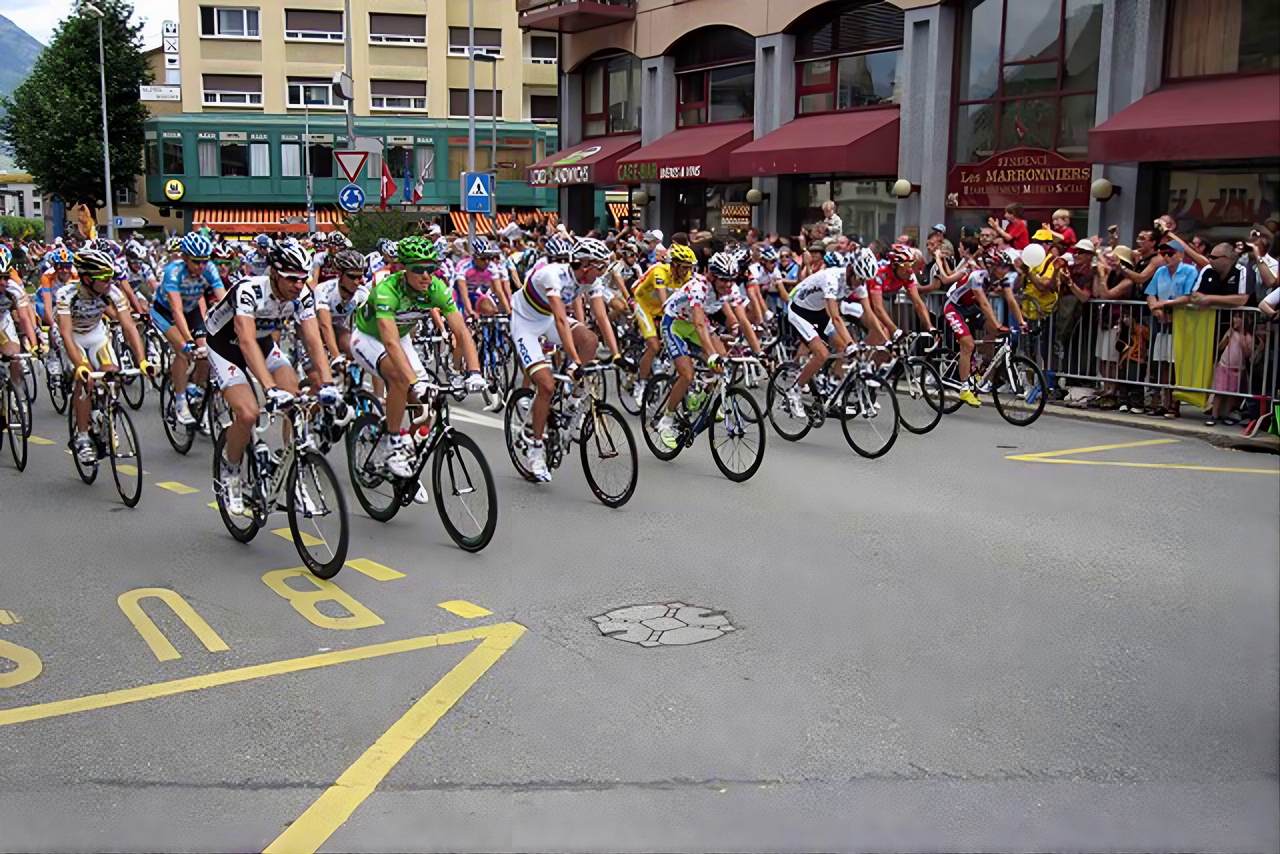
There is a simple way to better understand complex things: instead of asking what works, try asking what doesn’t work. It is a principle attributed to Carl Gustav Jacob Jacobi, and outside of mathematics it becomes surprisingly concrete. Because success can take a thousand different paths, while mistakes tend to look very similar. And so, instead of asking ourselves what the perfect bike is, it is worth trying to flip the question and ask: how do you choose a bike in the wrong way?
If you follow this logic, the first thing to do is simple: don’t start from yourself. Don’t ask how you ride, how much you ride, where you ride. Look outward, not inward. Look for a bike that works for someone else, maybe for a professional, maybe for someone who rides in a completely different way. And then adapt, because in the end it’s easier that way.
The most interesting point, however, emerges when this reasoning is brought into professional cycling. Today the model is clear: bikes arrive through sponsorships, they are part of an economic and media system that works perfectly like this. It is marketing. But let’s try to invert it. Let’s imagine, for a moment, that a professional has to buy his bike, not receive it. That he has to truly choose it. In that moment everything would change: the choice would no longer start from a brand, but from a need, not from a range, but from a person. Every detail would become a decision and not a consequence, and above all it would be difficult to imagine a bike that is the same for everyone. Because when the choice is real, it inevitably becomes specific, and when it is specific it tends to get closer and closer to the person who uses it.
This is not just a theoretical hypothesis. Every now and then, almost by accident, cracks emerge within this system that give a glimpse of what happens when real choice comes into conflict with imposed choice. From this point of view, the story of Alberto Contador is emblematic, as in an interview he described a clash with the brand that supplied bikes to his team. After winning the Giro d’Italia with a certain model, he found himself having to use the new one introduced by the sponsor, a bike that he and his team had judged to be less performant. The reason was not technical, but design and commercial: cable integration, aesthetic cleanliness, product evolution. To his objection — simple, almost brutal — that the bike was more beautiful but slower, the answer was just as direct: they knew it, but he had to use it anyway.
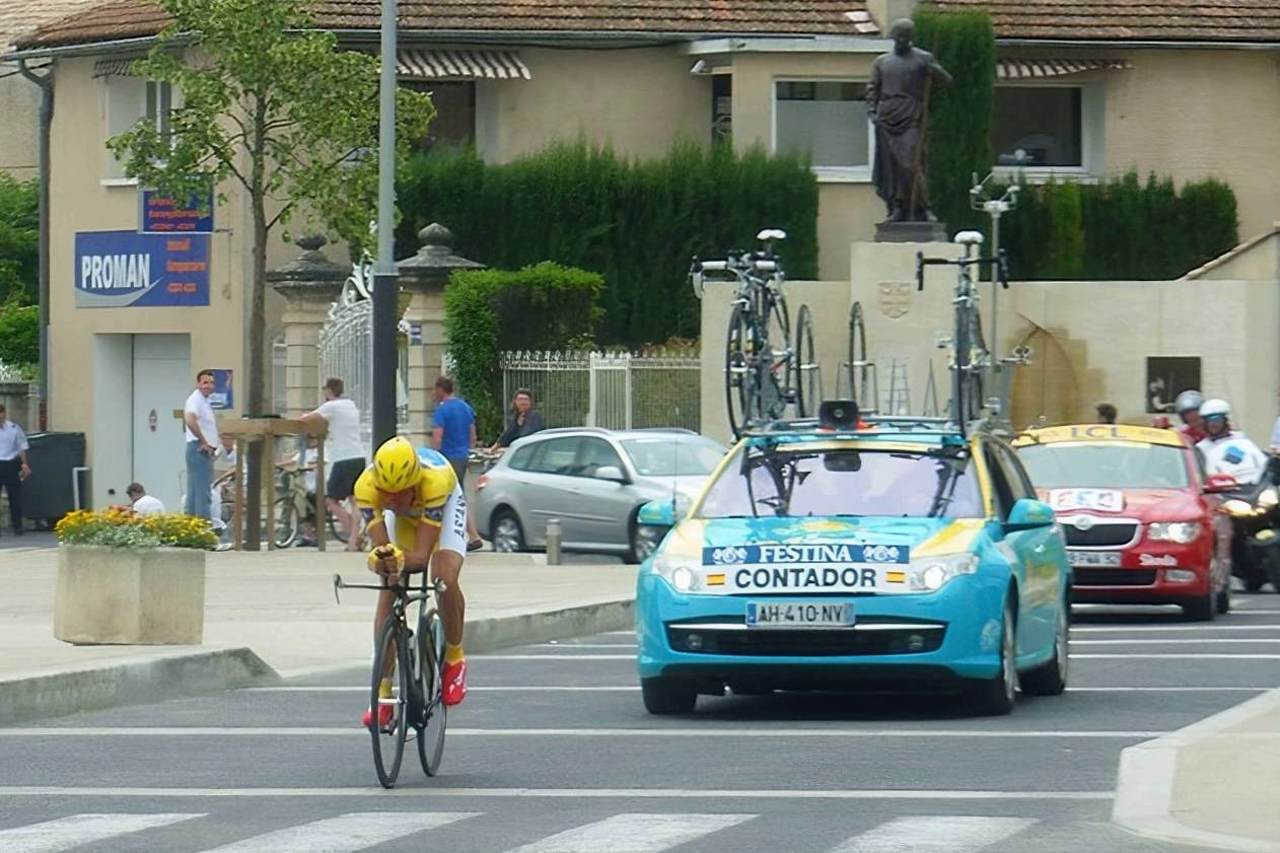
The point is not the single episode, but what it reveals. Contador describes how he paid attention to every detail in an almost obsessive way, going as far as modifying his helmet, clothing, and shoes just to gain something in terms of performance. And yet, at the same time, he was forced to race on a bike he had not chosen and that he knew was inferior to the previous one. It is a contradiction that, when observed through Jacobi’s inversion, becomes extremely clear: the system is not built to maximize individual choice, but to sustain a larger balance.
And so the question becomes inevitable. What would happen if that constraint did not exist? If a professional could truly choose without conditions? If the bike were not part of a contract, but the result of a personal decision, paid for and fully embraced? It is hard to imagine that in such a context someone would choose something standard, something designed for everyone. Because when the responsibility of the choice returns to the person who uses it, everything becomes more precise, more focused, more personal.
At this point the transition is almost automatic, because outside of professional cycling this condition already exists. Those who ride without sponsorship constraints have a freedom that, paradoxically, a professional does not have: they can truly choose. And yet, often, they don’t. In fact, they do exactly the opposite. They choose what everyone else chooses, they rely on what they see, they give more weight to image than to sensations, they look for a bike that seems right instead of one that is right. They chase an idea, not an experience. That is exactly what marketing does by sponsoring professionals: imposing a product by first making us believe in the idea.
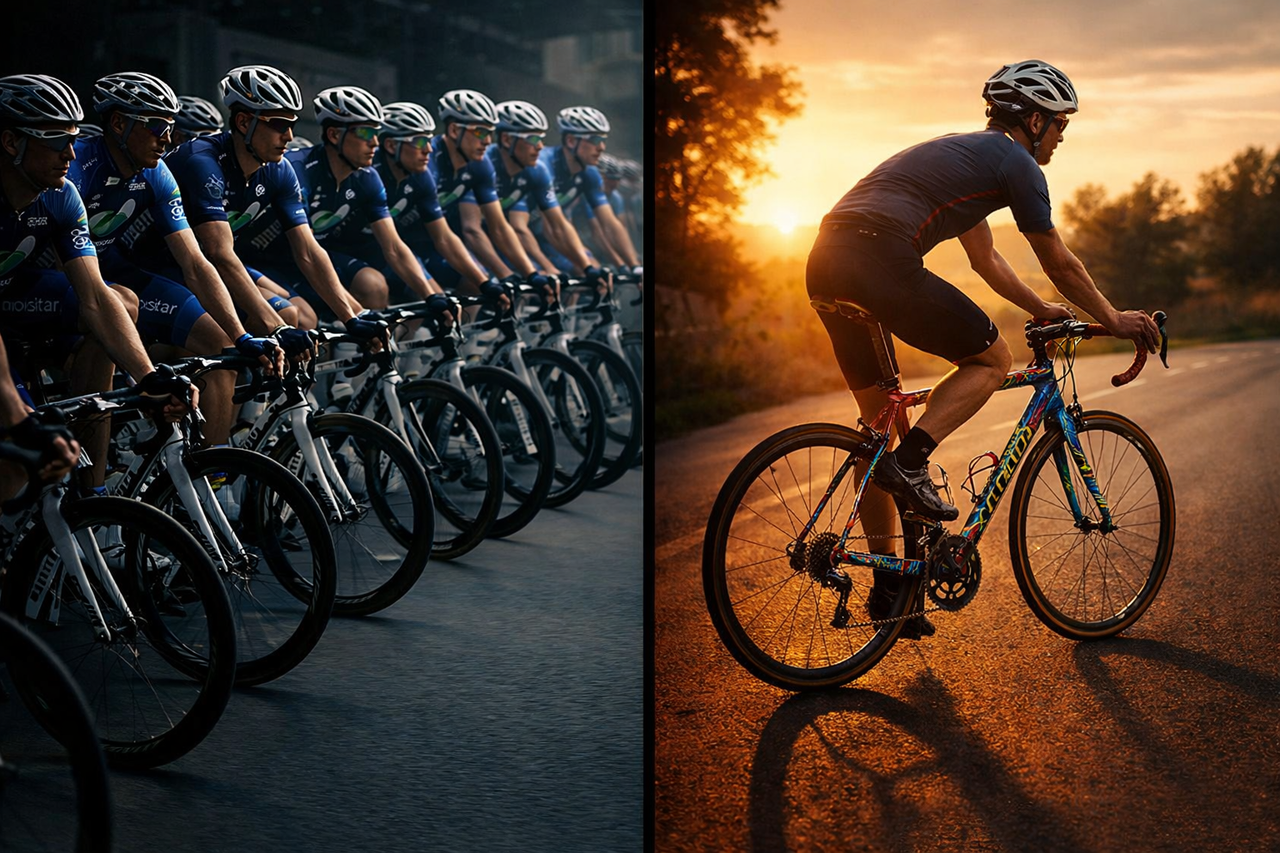
If you continue to follow the inversion, the picture becomes even clearer. To choose poorly, it is enough to want an ordinary bike, a bike identical to everyone else’s, a bike designed for a use that is not your own. It is enough not to ask questions, to avoid any form of responsibility, to delegate the choice to the market, to trends, to the group. It is enough to treat the bike as just another object, interchangeable, and when something doesn’t work, to attribute the problem to what you bought, not to how you chose it.
And this is where the circle closes, returning to the starting point. Because the question, in the end, is not which bike is the best, but how much of the choice is truly ours. The moment you remove all shortcuts — imitation, superficiality, standardization — only one thing remains: the search for something that makes sense for the person who uses it. And at that point, the concept of a custom-made bike stops being a luxury or a whim and simply becomes the most logical consequence of a well-made choice. It is not a matter of exclusivity, but of coherence. It is not something extra, but something that emerges when everything else is taken away.